
PConline — On April 2, 2018, at the 7th Global Mobile Game Conference (GMGC Beijing 2018), our reporter had the honor of interviewing Nie Song, General Manager of Huawei's Consumer Internet Solutions. He shared the technological foundation for innovation and development in the gaming industry, as well as the value that technologies such as AI, 5G, and blockchain—key elements of game innovation—can bring to innovators.
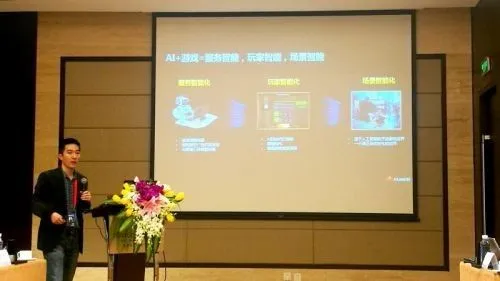
Nie Song, General Manager of Huawei's Consumer Internet Solutions
Regarding game innovation, Nie Song particularly emphasized the importance of technology as "fertile ground": the prevalence of standalone Minesweeper games is supported by Intel CPUs and Windows operating systems; PC connectivity, offline payments, and mature IDC technology have ushered in the era of legendary games; Behind China's 218.9 billion yuan gaming revenue in 2017 are 4G, WiFi networks, mobile payments, smartphones, and mature cloud computing. In 2018, the popularization of 5G, blockchain, AI, AR/VR will bring multi-dimensional innovation in gameplay, services, and scenarios to the gaming industry.
In this regard, Nie Song first stated that in gaming solutions, Huawei Cloud does not make gaming products, does not compete with gaming enterprises, and insists on being the engine and productivity of gaming enterprises. Huawei Cloud's gaming solution has now built capabilities across the entire industry chain of game development, game deployment, game operations, and game innovation. In the future, Huawei Cloud will focus on several major directions in the gaming industry:
First, at the infrastructure level, the most used products in the gaming industry in recent years have been cloud host virtual machines. Huawei Cloud hosts have excellent performance, and bare metal services have been rated as the most influential product of the year by third-party organizations.
Second, in terms of cloud container products, containers are significant for game deployment and can support the evolution of game product architecture. By using containers, gaming enterprises can increase server deployment elasticity by more than 10 times, reduce the time for expanding server areas to minutes, and reduce overall operating costs by more than 50%.
Third, at the AI capability level, Huawei, as a company with chip-level R&D capabilities at both the cloud and terminal ends, can perform face recognition on the terminal side; big data analysis, video analysis, and visual cognition on the cloud side; at the underlying architecture, Huawei Cloud uses Atlas, GPU, FPGA and other hardware to customize computing power for AI, thereby meeting the needs of gaming companies in terms of performance, latency, etc.
Fourth, Huawei's cloud gaming achieves instant play. Games do not require modification, and multi-user live streaming social gaming significantly improves customer experience.
Fifth, at the blockchain level, Huawei can deploy a complete blockchain system within ten minutes, with a computing capacity of up to 2000 TPS, easily helping gaming customers achieve free exchange of different game items.
Finally, Nie Song particularly emphasized the advantages of Huawei terminals: more than 300 million registered mobile users, more than 370,000 users in the Huawei Developer Alliance, more than 45 billion app market downloads, and more than 100 Huawei Cloud services. At this conference, Huawei also released a joint plan with Consumer Cloud, where registered and certified Consumer Cloud developers can receive a terminal-cloud collaboration package. In the future, Huawei Cloud will also launch larger and better support plans for developer innovation.
As the scale of game users gradually shifts from the incremental market to the stock market, the game market is shifting from buying volume users to pursuing ultimate experience. With Huawei's "fertile ground" for building an intelligent world, what changes will innovation bring to the Chinese game market in 2018? Let us wait and see!